An NCLEX® retake can mess with your head, but you’re not alone. In 2024, 92,813 RN and PN candidates didn’t pass.1 The reality is that plenty of great nurses didn’t pass the first time.
Here’s the good news: Repeat pass rates look low mostly because people study the same way twice. Change the plan; change the result.
Below are 5 retake tips for the NCLEX to make your next attempt your last. Remember, you’ve got this.
1) Turn Your Candidate Performance Report (CPR) into Action
First move: Grab your CPR. Circle what’s “below,” “near,” and “above” the passing standard. Choose 2-3 “below” areas to fix first; then map each to a clinical judgment step.
Think of your first exam attempt as practice. Now, you’ll be going into your NCLEX retake knowing exactly what to expect and having had time to turn weaknesses into strengths.
Read the in-depth guide on using your CPR to pass an NCLEX retake and learn more about NCLEX scoring and pass rates.
“So, I retook my NCLEX yesterday, but used UWorld this time instead of ATI, and I 100% recommend UWorld.” Read more Reddit reviews.
2) Understand What Went Wrong
Be specific about what didn’t work. Were you chasing quantity over quality? Skimming rationales? Rushing sets? Memorizing instead of understanding?
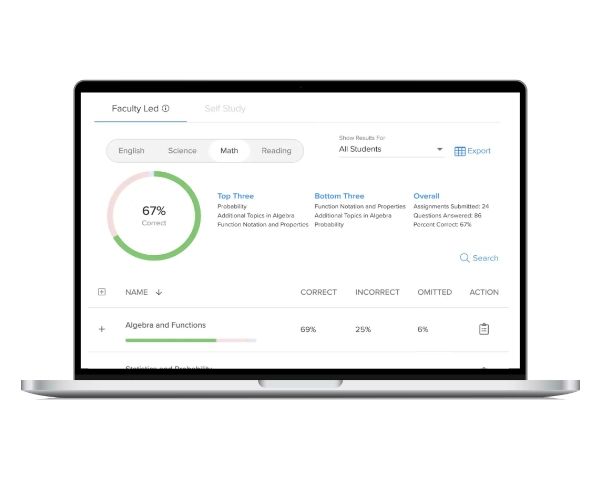
Make changes you can measure: Use smaller question sets you can fully review the same day, 1 primary resource you’ll actually finish, and a simple log or performance dashboard to track what’s improving.
3) Make an NCLEX Study Plan that Works (for You)
Once you know what to study, decide how much time you can commit. The soonest retake is 45 days after your last attempt, so book a date that you’ll have time to prepare for and make a study plan.
Example 30-day NCLEX retake study plan:
- Week 1: Pick 2–3 weak areas and do 60–75 questions daily. Read every rationale and add 10–15 clinical judgment items.
- Week 2: Do 75–100 mostly mixed questions. Time your sets (75–90 sec/item). If you hit 2 minutes, choose the safest answer and move on.
- Week 3: Do 75–100 mixed questions. Take Self-Assessment 1 and use the report to target gaps with focused sets. Add one longer stamina block.
- Week 4: Run mostly timed, mixed sets with one solid long session. Take a self-assessment 1–2 days before the exam. Keep the day before light.
Strengthen the plan with weekly practice, spaced-review cards for better retention, and high-yield NCLEX videos to grasp complex concepts.
Make it easier: Use a Dynamic NCLEX Study Planner to set your test date and get a daily schedule that tells you exactly what to study.
4) Practice Like It’s Exam Day
Set practice up the way you’ll test. Sit at a desk in a quiet room with your phone off and time yourself. Keep a steady pace of 75–90 seconds per item. If you’re stuck after 2 minutes, choose the safest option and move on so one question doesn’t drain the clock.
- Use self-assessments and custom tests that mirror the CAT testing environment.
- Mix formats (case studies, matrix, drop-downs, bow ties); answer every cell for partial credit.
- Start with smaller item blocks, then grow to longer mixed sets in the last 2 weeks.
- Practice short breaks at planned points to build exam-day endurance.
Use each self-assessment report like a map. Fix what it flags, run another focused set in that area, and watch your timing smooth out and your scores increase.
5) Use Rationales to Train Clinical Judgement
The NCLEX evaluates your ability to think critically in clinical situations. Treat each rationale like a quick case review, and keep sets small enough to fully review the same day. Use questions with in-depth, visual answer explanations written by nurses and subject matter experts.


Bonus Tip: Choose the Best Course for an NCLEX Retake
We make these NCLEX retake tips easy to execute. Use your CPR priorities to create custom practice tests, follow the daily tasks, use CAT-style practice, and join the 98% of first-timers and retakers who pass with UWorld.2*
Discover why we’re trusted by 1.4+ million nursing students and the exclusive NCLEX prep resources partner for the National Student Nurses’ Association (NSNA). Get started today.
*In 2024, 98% of learners averaging 70% on QBank passed NCLEX-RN; 98% averaging 64% passed NCLEX-PN.
Here’s What Our Students Are Saying…
Frequently Asked Questions (FAQs)
Should I study content or do more practice?
Both, but lead with practice that drives active learning. Expose gaps with practice tests, close them with rationale-based reviews, and reinforce with targeted content.
How many questions should I do each day?
Quality beats quantity. Most successful retakers aim for 2–4 short, timed sets (10–20 questions each) with thorough review, plus 1 longer set weekly to build endurance.
How do I handle stress and time on test day?
Use the same rules you practiced: mark-and-move at ~2 minutes, short resets (deep breath, shoulders down) on breaks, and focus on safety first when eliminating options.
References
- UWorld Nursing. “NCLEX Survey Results | UWorld’s Impact on Exam Success.” Accessed Oct. 20, 2025. https://nursing.uworld.com/educators/nclex-student-survey/. UWorld Nursing
- National Council of State Boards of Nursing (NCSBN). “NCLEX Pass Rates.” Accessed Oct. 20, 2025. https://www.ncsbn.org/exams/exam-statistics-and-publications/nclex-pass-rates.page. ncsbn.org